RU
RU  ZH
ZH  ES
ES 


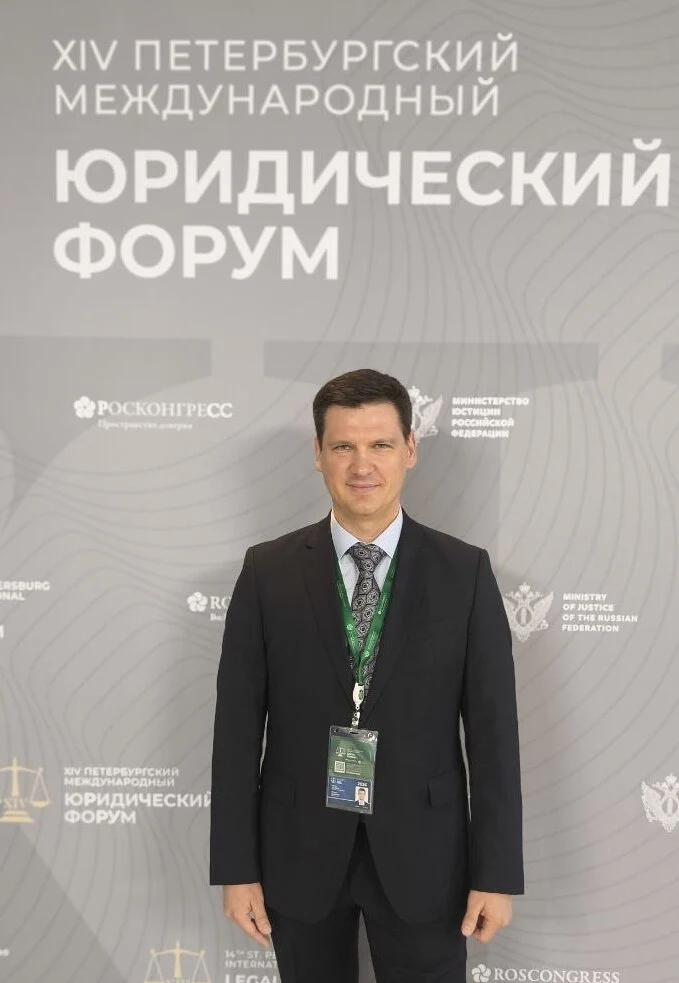
Attorney and Partner at BRACE Law Firm Roman Shabrov participated in the XIV St. Petersburg International Legal Forum (SPILF) under the motto “Time to Act in Law”, held on June 24–26, 2026, at the Expoforum Convention and Exhibition Centre in St. Petersburg. His participation focused on the international segment of the program – issues of international law, cross-border trade, and international trade (foreign economic activity), which are of direct importance to Russian and foreign businesses operating in Russia and the member states of the Eurasian Economic Union (the “EAEU”).
About the SPILF
The St. Petersburg International Legal Forum has been held annually since 2011 and remains a key platform for professional dialogue among legal practitioners, government officials, and business representatives from Russia and foreign countries. The Ministry of Justice of the Russian Federation and the Roscongress Foundation organize the event.
In 2026, the forum convened under the motto “Time to Act in Law”. The business program featured over 100 events in various formats – including a plenary session, thematic sessions, business breakfasts, presentations, meetings, and lectures – distributed across eight thematic tracks: Law and Society, Effective Law for an Effective State, Law and Business, Dispute Resolution, Development of Legislation, Digitalization in Law, International Law in a Changing World, and The Legal Community: Education, Profession, and Vocation. The International Youth Legal Forum (IYLF) ran concurrently, while several specialized events, including the Meeting of Ministers of Justice, took place on the margins of the main program.
The central event of the business program was the plenary session titled “International Law: A Privilege of the Few or the Right of Equals?”, which established the overarching framework for discussing the role of international law in a shifting global order.
International Agenda and International Trade Issues
Primary attention centered on the international segment of the program, particularly the “International Law in a Changing World” track. According to the forum's structural architecture, participants discussed a broad range of issues critical to entities engaged in cross-border commerce, including:
- recognition and enforcement of foreign judgments, including the practical aspects of the 2019 Hague Convention;
- the role of law in shaping conditions for foreign investments along the Russia-Asia corridor;
- fostering a space of legal trust for businesses across the CIS, EAEU, SCO, and BRICS countries;
- the future of international commercial arbitration and the search for novel approaches to resolving cross-border disputes;
- regulating international trade, digital payments, and maritime commerce amidst sanctions and restrictions;
- the operations of the EAEU Court as a mechanism for protecting the rights and legitimate interests of member states and economic entities.
Related challenges featured in the Law and Business and Dispute Resolution tracks: establishing joint ventures with foreign investors, handling cross-border bankruptcy, navigating platform businesses within the EAEU, managing tax regimes during international turbulence, and representing Russian businesses in cross-border arbitral and judicial proceedings. Collectively, these areas reflect the current agenda of companies engaged in foreign trade and investment activities.
The topics addressed at the forum directly correlate with the practice of international trade support. Structuring cross-border transactions, selecting applicable law and a competent forum for dispute resolution, recognizing and enforcing foreign awards, and managing sanctions and compliance risks largely determine the viability of current foreign trade and investment projects. For companies operating at the intersection of Russian and foreign jurisdictions, aligning contractual architecture with the active regulatory environment is of practical importance when planning operations in Russia, EAEU countries, and with Asian partners.
Following his participation in the forum, Roman Shabrov noted: "A significant portion of the forum's international agenda addressed legal cooperation within the CIS and EAEU, as well as collaboration with Asian states. This reflects a genuine reorientation of business ties: companies increasingly require transaction and dispute support that accounts for the nuances of multiple jurisdictions simultaneously.
"The future of international commercial arbitration and the resolution of cross-border disputes warranted special attention, particularly given the current challenges facing dispute resolution institutions. Today, a growing number of companies approach the selection of applicable law and dispute resolution mechanisms at the contracting stage based on current realities".
Practice Overview of BRACE Law Firm
BRACE Law Firm provides legal services to Russian and foreign businesses in Russia and EAEU countries on matters of Russian and international law. The firm's core focus includes disputes involving foreign companies, international trade support, drafting and negotiating foreign trade contracts, structuring cross-border supplies and transactions, and advising on applicable law, as well as customs and currency regulation.
Closely integrated with its international practice, the firm handles dispute resolution, including cross-border arbitral and judicial proceedings, and manages matters related to compliance and sanctions law. In addition, BRACE supports the commercial activities of companies, providing strategic guidance regarding antitrust regulation and state and corporate procurement.